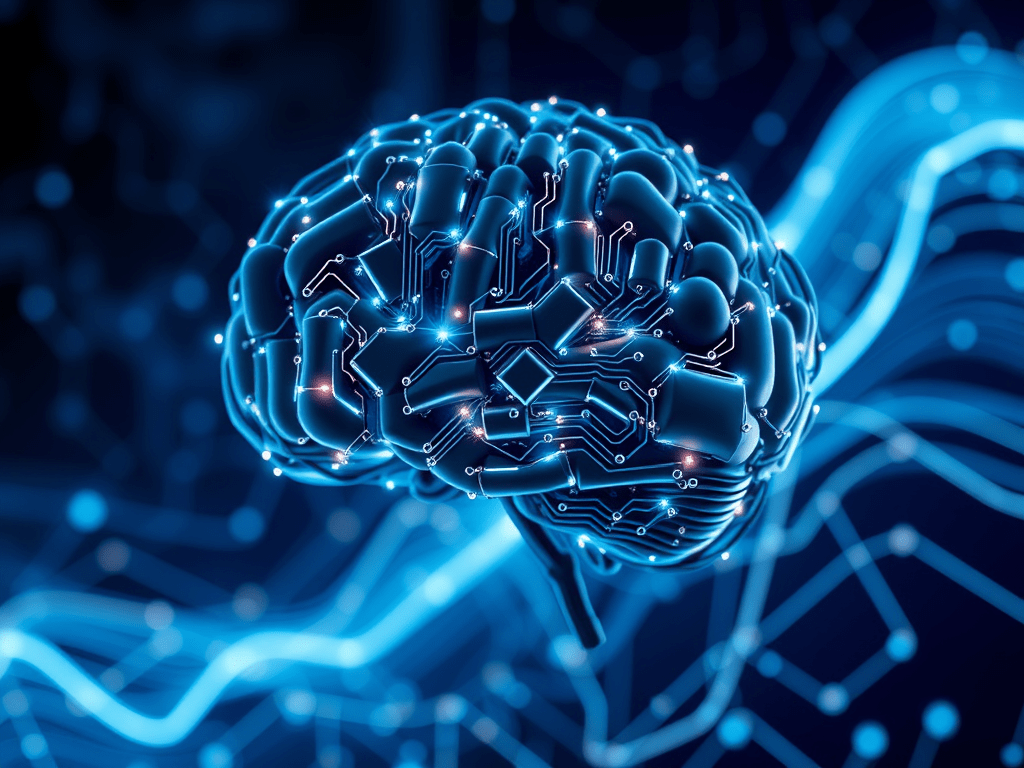
Artificial Intelligence (AI) has become one of the most revolutionary technologies of the 21st century. From voice assistants like Siri and Alexa to self-driving cars, AI is rapidly reshaping industries, lifestyles, and the future of human-machine interaction. But how does AI actually work? What’s behind this smart technology? Let’s break it down in simple terms.
watch the video on this topic on YouTube https://youtu.be/foVsf3hOmQY
🤖 What Is AI?
Artificial Intelligence (AI) refers to the simulation of human intelligence in machines. These machines are programmed to think, learn, reason, and even self-correct like humans. AI isn’t a single technology—it’s a collection of techniques, systems, and models that enable machines to perform tasks that usually require human intelligence.
🔧 Core Technologies Behind AI
1. Machine Learning (ML)
Machine Learning is the backbone of most AI systems. Instead of being explicitly programmed, machines learn patterns from data and improve over time.
- Example: Netflix recommends shows based on what you’ve watched before. That’s ML in action.
2. Neural Networks
Inspired by the human brain, neural networks are systems of algorithms that mimic how neurons connect and work. Deep Learning, a subset of ML, uses multi-layered neural networks to handle complex tasks like voice recognition or image classification.
3. Natural Language Processing (NLP)
NLP allows AI to understand, interpret, and generate human language. It powers chatbots, translation apps, and voice assistants.
4. Computer Vision
This enables machines to “see” and understand visual content like images or videos. Used in facial recognition, medical diagnostics, and more.
5. Reinforcement Learning
A method where AI learns by interacting with its environment and receiving feedback or rewards for its actions. This is how AI learns to play games or drive vehicles.
🏗️ How AI Is Made: Step-by-Step
Step 1: Data Collection
AI needs data—lots of it. This can include text, images, videos, audio, or sensor data.
Step 2: Data Preprocessing
Raw data is messy. It needs cleaning, labeling, and structuring before it can be used to train AI models.
Step 3: Model Building
Engineers and scientists use algorithms (like decision trees, neural networks, or transformers) to build models. These models are like blueprints that define how the AI will behave.
Step 4: Training the Model
The AI is trained by feeding it the prepared data so it can recognize patterns and improve over time. This can take days or even weeks depending on the size of the model.
Step 5: Testing & Evaluation
Once trained, the model is tested on new, unseen data to check its accuracy and performance.
Step 6: Deployment
The final AI model is integrated into apps, websites, robots, or devices for public or private use.
🌐 Real-World Examples of AI
- ChatGPT – A language model trained to understand and respond like a human.
- Tesla Autopilot – Uses AI for self-driving capabilities.
- Google Translate – Uses NLP and ML to translate text across languages.
- Spotify Recommendations – Analyzes your music habits using ML.
📚 Sources & Technologies Used to Make AI
- Programming Languages: Python, R, JavaScript, C++
- Frameworks & Libraries: TensorFlow, PyTorch, Scikit-learn, Keras
- Databases: SQL, NoSQL, cloud storage (AWS, Google Cloud, Azure)
- Hardware: GPUs (Graphics Processing Units), TPUs (Tensor Processing Units)
- Cloud Platforms: Google Cloud AI, Azure AI, AWS SageMaker
- Open Datasets: Kaggle, OpenAI, ImageNet, Common Crawl
⚖️ Ethical Considerations
As powerful as AI is, it raises questions around:
- Bias in AI decisions
- Privacy concerns
- Job displacement
- Transparency in AI algorithms
Developers and organizations are now focused on creating ethical and responsible AI that benefits everyone.
🧩 Conclusion
AI is a complex but fascinating technology that combines data, math, logic, and engineering to give machines the ability to learn and act smartly. As we move further into the AI-driven future, understanding how it works is essential—not just for engineers, but for everyone.
Whether it’s writing a story, detecting diseases, or driving cars—AI is here to stay. And the more we understand it, the more we can shape its future use responsibly.
 AI WITH MATIN
Leave a comment